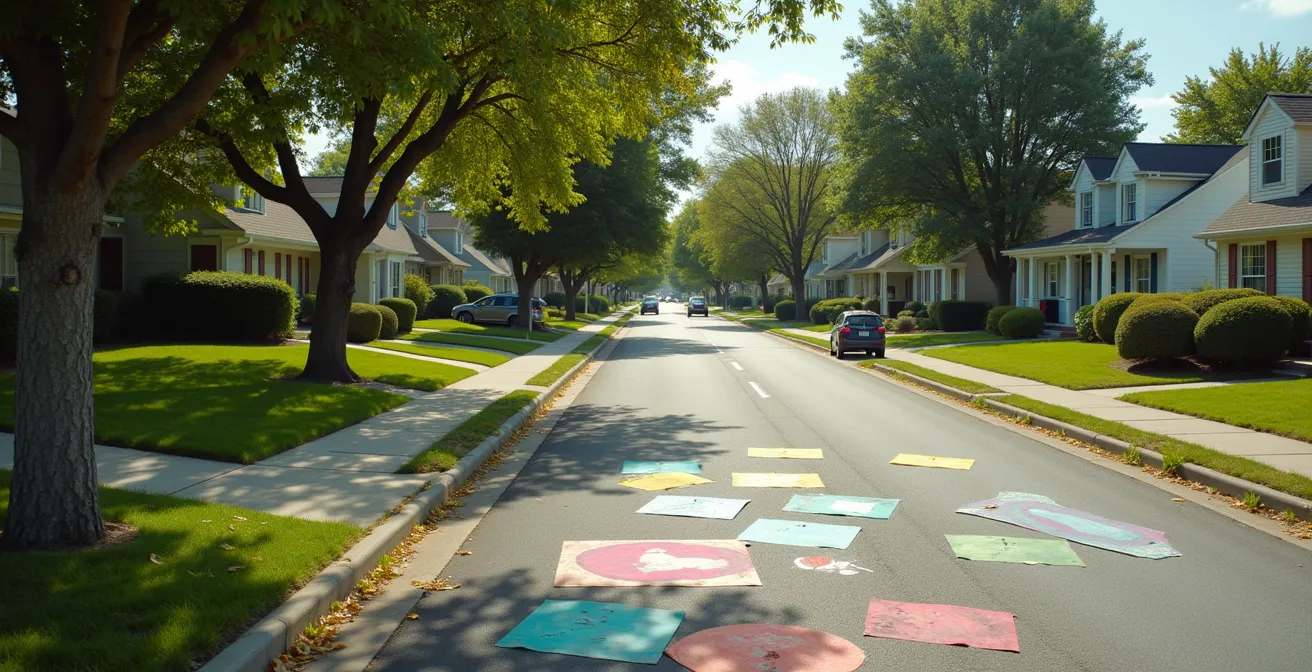
Winning your neighborhood isn’t about outspending competitors; it’s about out-caring them by weaving your brand directly into the community’s fabric.
- Genuine community integration, like school fundraisers and team sponsorships, builds trust and word-of-mouth that ads can’t buy.
- Hyper-local tactics, both digital (geofencing) and physical (new mover packs), create memorable touchpoints that drive real foot traffic.
- Every offline action—from hosting a workshop to sponsoring an event—can be leveraged to dominate “near me” searches on Google Maps.
Recommendation: Start by choosing one community-focused initiative, like a school donation night or a small team sponsorship, and execute it flawlessly to build momentum.
As a franchisee, the suburban battlefield can feel daunting. You’re up against the convenience of big-box stores and the established routines of local residents. The common advice is to throw money at the problem: run more ads, boost more posts, and blanket mailboxes with generic flyers. But what if the key to winning isn’t a bigger budget, but a smarter, scrappier approach? What if you stopped marketing *to* your community and started marketing *with* them?
This is the heart of suburban guerilla marketing. It’s about more than just chalk art on the sidewalk or a clever sticker campaign. It’s a strategic mindset focused on embedding your business into the very fabric of neighborhood life. It’s about showing up where your customers already are—at the school play, the little league game, the Saturday morning dog walk—and providing genuine value. This isn’t just about brand awareness; it’s about becoming a trusted, indispensable part of the local ecosystem.
Forget the broad strokes. We’re going block by block. This guide will walk you through creative, low-cost strategies that turn neighborhood pride into your most powerful marketing asset. We’ll explore how to transform your physical space into a community hub, leverage micro-sponsorships for maximum ROI, and connect your offline efforts to dominate local online searches, proving that the best way to get customers in your door is to first become a good neighbor.
This article provides a playbook of actionable strategies to make your business a neighborhood staple. Explore the sections below to find the tactics that best fit your brand and community.
Summary: Guerilla Tactics for Neighborhood Domination
- The School Night Fundraiser: Why 20% Donation Nights Are Your Best ROI?
- The Digital Fence: Serving Ads to Customers Walking into Your Competitor’s Store
- Jersey Sponsorships: Are Little League Teams Worth the $500 Investment?
- The “New Mover” Pack: Hitting Mailboxes Before They Unpack the Kitchen
- The Workshop Strategy: Turning Your Space into a Community Hub on Off-Nights
- Building Community Trust: Which Local Sponsorships Actually Drive Footfall?
- Beyond the City Name: Ranking for “Downtown” or “West End” Specific Searches
- Winning the “Near Me” War: How to Rank #1 on Google Maps in Your Zip Code?
The School Night Fundraiser: Why 20% Donation Nights Are Your Best ROI?
A “spirit night” where you donate 15-20% of sales to a local school seems like a simple act of charity, but it’s one of the most potent guerilla marketing tactics available. Why? Because you’re not just buying an ad; you’re buying into a trusted communication network. The school promotes your business to its families through newsletters, social media, and word-of-mouth. For one evening, you become the default dinner or shopping choice for hundreds of people who are emotionally invested in the outcome. This isn’t just a transaction; it’s a community-endorsed event.
The secret to maximizing ROI isn’t the percentage you donate, but the participation you generate. You must treat it like a major product launch. Provide the school with ready-made promotional materials: flyers, social media graphics, and email copy. Run a contest for the class with the highest attendance. The goal is to make it an easy “yes” for the school to promote and a can’t-miss event for families. The difference between a passive event and an actively promoted one is enormous; research shows that participation rates directly impact an event’s success, with higher engagement potentially doubling the outcome.
Think of the long-term value. You’re not just getting sales for one night. You’re introducing dozens of new families to your business in the most positive context possible. They arrive happy to support a cause, creating a powerful first impression. That goodwill translates into repeat visits, positive reviews, and an authentic reputation as a business that genuinely cares about the neighborhood—a reputation no amount of advertising can buy.
The Digital Fence: Serving Ads to Customers Walking into Your Competitor’s Store
Guerilla marketing isn’t just about offline stunts; it’s about using every tool at your disposal in a clever, targeted way. Enter geofencing: a scrappy digital tactic with pinpoint accuracy. In simple terms, you can draw a virtual “fence” around any location—like your direct competitor’s storefront. Any time a potential customer with a smartphone crosses that boundary, you can serve them a targeted ad. Imagine a customer walking into the big-chain coffee shop and getting a notification on their phone: “Tired of the same old brew? Get your first coffee on us, just two blocks away.”
This paragraph introduces the power of geofencing. To help visualize how this digital strategy carves out territories in the physical world, the illustration below depicts these invisible boundaries.

As the image suggests, this creates a digital layer over the physical landscape. It’s a direct, timely, and often irresistibly tempting message delivered at the exact moment of decision. The effectiveness of this strategy is well-documented; studies indicate that geofencing campaigns can achieve a significant increase in foot traffic and conversion rates. It’s the digital equivalent of standing outside your rival’s door with a better offer. While large companies use this for complex systems, the principle is accessible to small businesses through various ad platforms.
Case Study: Samsung’s Advanced AI-Geofencing
To see the potential of this technology, look at Samsung’s Bespoke AI appliance launch in April 2024. They integrated AI-geofencing to allow users to manage their appliances remotely based on their location. While a franchisee won’t be building smart fridges, this demonstrates the core principle: using a customer’s physical location to trigger a relevant, valuable digital interaction. For a small business, that trigger isn’t “preheat the oven” but “come get a free cookie.”
The beauty of geofencing for a franchisee is its hyper-local precision and efficiency. You’re not wasting ad spend on people miles away; you’re exclusively targeting individuals who are physically near your competitors, demonstrating a clear intent to purchase. It’s a bold, direct, and measurable way to win customers one at a time.
Jersey Sponsorships: Are Little League Teams Worth the $500 Investment?
Putting your business name on the back of a dozen Little League jerseys can feel like a shot in the dark. Is anyone really paying attention? The answer is yes, but the value isn’t just in the logo visibility. A $500 sponsorship is an investment in becoming part of a family’s weekend routine. Your logo is seen week after week by parents, grandparents, and friends on the sidelines—a highly engaged and geographically concentrated audience. It’s a slow burn, building familiarity and goodwill with every game played.
The key is to see the sponsorship not as a passive ad, but as an access pass to a community. The real ROI comes from activating it. Don’t just hand over a check; get involved. Show up to a game with free water bottles. Offer the team a “post-win” discount. This transforms your brand from a name on a shirt to an active supporter of the team’s success. Your $500 buys you a season’s worth of positive association and direct access to a network of local families.
To decide which sponsorship is right for you, you need to compare the options not just on cost, but on reach and activation potential. The following table breaks down common local opportunities.
| Sponsorship Type | Average Cost | Estimated Reach | Community Impact | ROI Tracking Method |
|---|---|---|---|---|
| Little League Team | $500 | 200-300 families | High – direct parent engagement | QR code tracking, seasonal polls |
| School Chess Club | $250 | 50-100 families | Medium – academic focus | Event attendance tracking |
| Local Theatre Group | $750 | 300-500 attendees | High – cultural involvement | Ticket discount redemption |
| Youth Soccer League | $600 | 250-400 families | High – weekly visibility | Social media mentions |
Your Sponsorship Audit Checklist: 5 Steps to Maximize ROI
- Points of Contact: List all the places your brand will be seen or mentioned (jerseys, banners, emails, social media). Are you getting more than just a logo on a shirt?
- Activation Plan: Brainstorm three concrete ways to engage with the sponsored group beyond the initial check (e.g., host a party, offer a special discount, feature them in-store).
- Audience Alignment: Does this group’s families match your ideal customer profile? A family restaurant sponsoring a youth team is a perfect match.
- Tracking Mechanism: How will you measure impact? Implement a unique QR code for the team, a specific discount code, or a “how did you hear about us?” poll during the season.
- Content Generation: Can this sponsorship create marketing content? Plan to take photos (with permission) for social media and create a “Team of the Week” feature.
The “New Mover” Pack: Hitting Mailboxes Before They Unpack the Kitchen
When a new family moves into the neighborhood, they are a blank slate. They have no loyalties, no established routines, and a long list of needs. Being the first local business to say “welcome” is an incredibly powerful advantage. Forget generic coupons. The guerilla approach is to create a “New Mover Pack” that is so useful, memorable, and thoughtful that it immediately establishes your brand as an indispensable local resource. This is your chance to make a killer first impression.
This isn’t about a flimsy flyer; it’s about a curated welcome experience. Your pack should solve immediate problems and provide insider knowledge. Think beyond a simple discount. What does a new resident *really* need? The secret to the best dog walking route? A guide to local playgrounds? A list of the best take-out spots for moving night (with your business at the top)?
Case Study: Felix Homes’ Unforgettable Welcome
When real estate company Felix Homes launched in Nashville, they needed to make a splash. Their solution was brilliantly simple and practical: they handed out over 10,000 custom-branded rolls of toilet paper downtown. The rolls featured their logo, slogan, and contact info. It was unexpected, undeniably useful, and generated massive buzz. This campaign shows how a mundane item can become a memorable marketing tool, especially for new movers who might have forgotten to pack the essentials.
The key to a successful New Mover Pack is a combination of utility and strategic partnerships. The illustration below captures the feeling of unboxing a thoughtfully curated welcome package, turning a simple box into a moment of discovery.
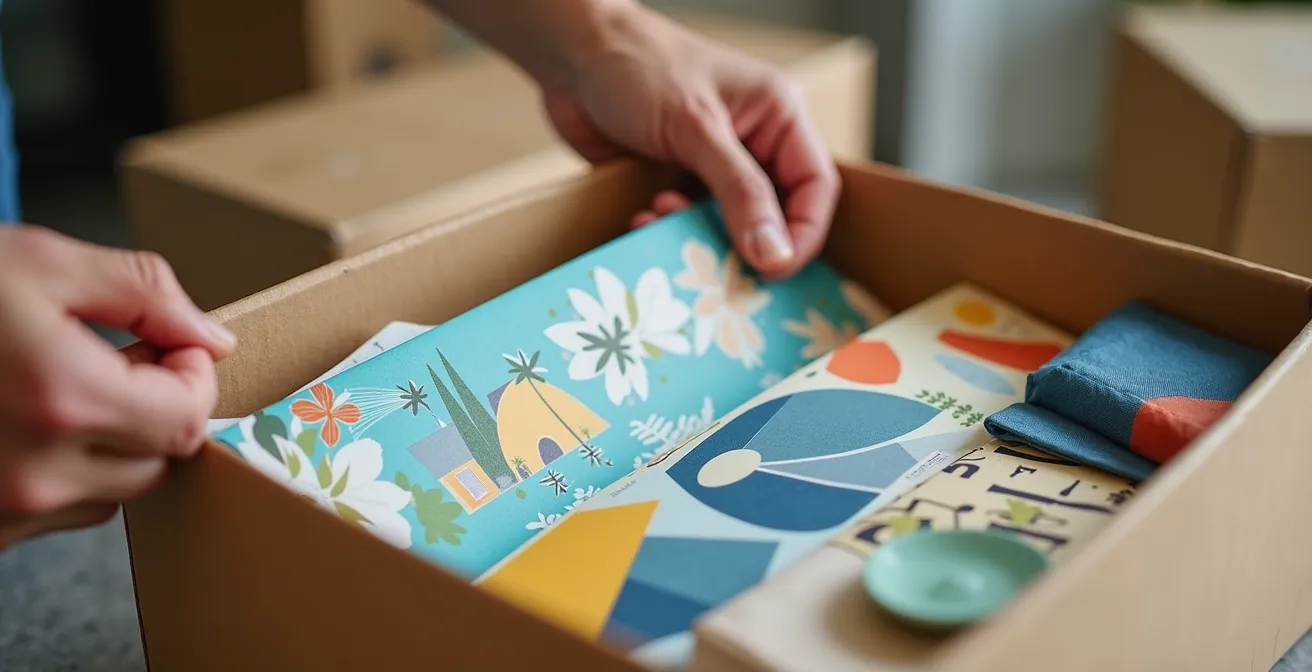
To ensure your pack lands in the right hands, partner with the gatekeepers of the moving process: local real estate agents, moving companies, and HOA welcome committees. Offer to provide the packs for free in exchange for exclusive distribution. By doing so, you gain a trusted endorsement and ensure your message is the first one new residents receive, positioning your business as a foundational part of their new life in the neighborhood.
The Workshop Strategy: Turning Your Space into a Community Hub on Off-Nights
Your physical location is more than just a place of transaction; it’s a potential community asset. On a slow Tuesday night, could your space be used for something more? The workshop strategy is about transforming your business into a “third place”—a social hub outside of home and work. By hosting small, free, or low-cost events, you invite people to experience your brand in a no-pressure environment, building relationships that lead to long-term loyalty.
The topic of the workshop should be related to your business but focused on providing value, not a sales pitch. A hardware store could host a “DIY basic home repair” class. A cafe could run a “latte art for beginners” session. A bookstore could host a local author reading. The goal is to leverage your existing expertise and space to create an experience. You are not just selling products; you are sharing knowledge and fostering connections. This positions you as a generous expert and gives people a new reason to visit.
Case Study Analogy: Duracell’s “Moments of Warmth”
In a freezing Canadian winter, Duracell transformed a bus shelter into an interactive heater. It only activated when people on either side joined hands, completing a circuit. This campaign brilliantly turned a mundane public space into a collaborative, heartwarming experience that generated huge organic buzz. For a franchisee, the lesson is the same: how can you transform your functional space into an interactive, community-building experience? Your workshop is your “heated bus shelter”—an excuse for people to come together, courtesy of your brand.
The magic of the workshop strategy is the funnel it creates. An attendee who has a positive experience is highly likely to become a customer. An engaged customer might be invited to co-host a future event. A co-host becomes a vocal brand ambassador. By following up with attendees, offering exclusive content, and creating a sense of an “insider” group, you can systematically turn casual interest into a loyal tribe of advocates who feel a genuine sense of belonging.
Building Community Trust: Which Local Sponsorships Actually Drive Footfall?
Not all sponsorships are created equal. While putting your name on a Little League jersey has its merits, building deep community trust requires a more nuanced approach. The most effective sponsorships are those where your brand’s values authentically align with the cause you’re supporting. A quiet bookstore sponsoring a loud music festival might create brand visibility, but it feels disconnected. The same bookstore sponsoring the local library’s summer reading program? That’s a perfect match. It signals that you share the same values as your target audience, building credibility and authentic connection.
Before committing funds, you must evaluate opportunities through a strategic lens. Consider the “activation potential.” Can you do more than just write a check? Sponsoring a food bank is great, but organizing a volunteer day for your staff and customers at the food bank creates a much deeper impact. It generates content, fosters team morale, and demonstrates your commitment in a tangible way. Don’t forget to calculate the true cost, which includes not just money but also time. According to industry data, the value of a single volunteer hour is estimated at $29.95, so factor in your team’s time commitment when assessing ROI.
This evaluation matrix can help you weigh different opportunities and make a decision based on strategic fit, not just cost or visibility.
| Evaluation Criteria | Weight | Music Festival | Library Program | Food Bank |
|---|---|---|---|---|
| Audience Alignment | 30% | Low (if quiet bookstore) | High | Medium |
| Activation Potential | 25% | Limited | High (author events) | Medium (volunteer days) |
| Media Visibility | 20% | High | Low | Medium |
| True Cost (money + time) | 25% | High | Low | Medium |
Ultimately, the sponsorships that drive footfall are the ones that make customers feel good about supporting you. When they see your business consistently showing up for causes that matter to the neighborhood, they are not just buying a product; they are voting with their wallets for a business that is an integral and positive force in the community.
Beyond the City Name: Ranking for “Downtown” or “West End” Specific Searches
Your customers don’t think in zip codes; they think in neighborhoods. They search for “pizza in the West End” or “best coffee near downtown.” If your online presence is only optimized for your city, you’re missing out on these high-intent, hyper-local searches. Winning the suburban digital war means owning these micro-geographies. This involves creating content and signals that prove to Google you are not just *in* the community, but the undisputed authority *for* that specific part of town.
Case Study: Volkswagen’s Hyper-Local Experience
Volkswagen’s “fast lane” campaign, which installed a giant slide next to an escalator in a Berlin train station, is a brilliant example of location-specific marketing. It created a joyful, memorable experience tied to one specific place: the Alexanderplatz station. The resulting YouTube video generated millions of views, but the initial magic was purely local. This shows how a stunt in a specific micro-location can generate both immediate local buzz and lasting digital content that forever associates a brand with that spot.
For a franchisee, the takeaway isn’t to build a slide, but to think in terms of hyper-local anchoring. Your content strategy should mirror the way locals talk. Create dedicated landing pages on your website for “Your Service in [Neighborhood Name].” Write blog posts that are genuinely useful to residents of that area, like “Our Guide to the Five Best Dog Parks in the West End” (making sure the route passes your store). Feature photos of your work or events with recognizable local landmarks in the background. This creates a powerful web of content that screams “local expert.”
This strategy extends to your social media. Create neighborhood-specific hashtags (#DowntownDeals, #WestEndEats) and run contests that encourage user-generated content tagged with local spots. By consistently creating content that is deeply rooted in the specific geography and culture of a neighborhood, you build an online moat that national chains can’t replicate. You become the go-to answer not just for your product, but for the neighborhood itself.
Key Takeaways
- True suburban marketing is about community integration, not interruption. Embed your brand in local life.
- Low-cost, high-impact tactics like school fundraisers and new mover packs build trust and word-of-mouth that paid ads cannot.
- Every offline action, from sponsoring a team to hosting an event, is an opportunity to generate powerful content that boosts your local SEO and Google Maps ranking.
Winning the “Near Me” War: How to Rank #1 on Google Maps in Your Zip Code?
For a local franchisee, ranking at the top of Google Maps for a “near me” search is the holy grail. It’s the modern-day yellow pages, front-page ad, and trusted recommendation all rolled into one. While technical SEO factors like a complete Google Business Profile are the foundation, the real secret to dominating the map pack lies in connecting all the offline guerilla marketing tactics we’ve discussed directly to your online presence. Google rewards businesses that are not just located in a community, but are visibly and actively a part of it.
Every community event is a signal you can send to Google. Did you sponsor a Little League team? Post photos of the team on your Google Business Profile (GBP). Did you host a workshop? Encourage attendees to leave a review mentioning the event by name. Are people constantly asking about parking? Seed your own GBP Q&A section with questions like, “Is there good parking near your shop in the downtown area?” and answer it thoroughly. These actions create a rich, continuous stream of hyper-local, activity-based signals that Google’s algorithm loves.
The most powerful signal of all is customer reviews that are rich with local context. When you ask for reviews, don’t just say “leave us a review.” Guide them. Ask them to mention their neighborhood or the specific problem you solved. A review that says, “This is the best place in the West End to fix a flat tire” is infinitely more valuable for local SEO than one that just says “Great service.” It reinforces your geographic authority and relevance for that specific search query.
By meticulously documenting every offline community engagement online, you create a powerful feedback loop. Your real-world actions prove your local relevance, which boosts your online visibility, which in turn drives more real-world foot traffic. You win the “near me” war not by out-spending, but by out-participating your competition in the life of the neighborhood.
Start today by picking one of these scrappy strategies and committing to it. Weave your brand into the story of your neighborhood, and you won’t just gain customers—you’ll build a loyal community that champions your success.